
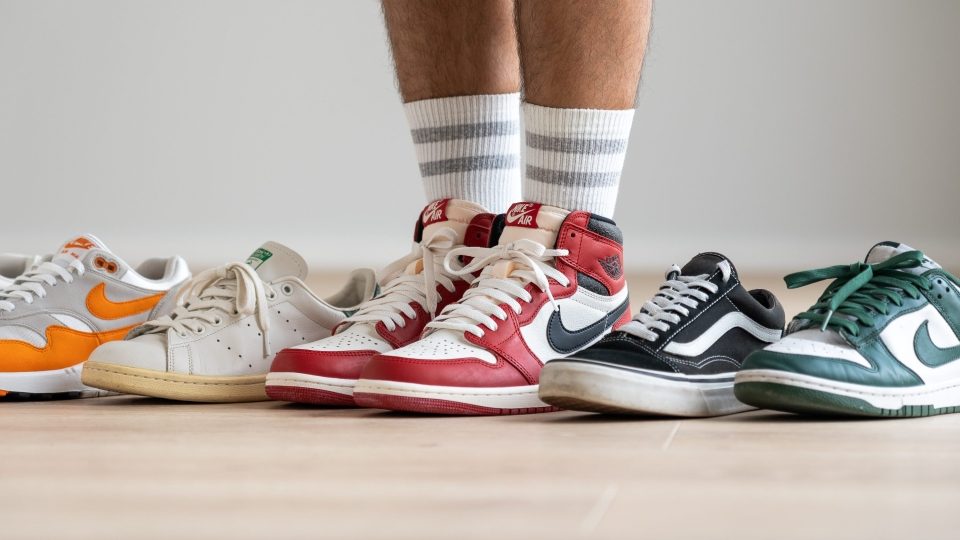
How are men’s trainers different than women’s?
Fortunately for men, the majority of footwear is made for them. Usually, it’s women who have to worry about different designs because trainers made for men seem to be the default.
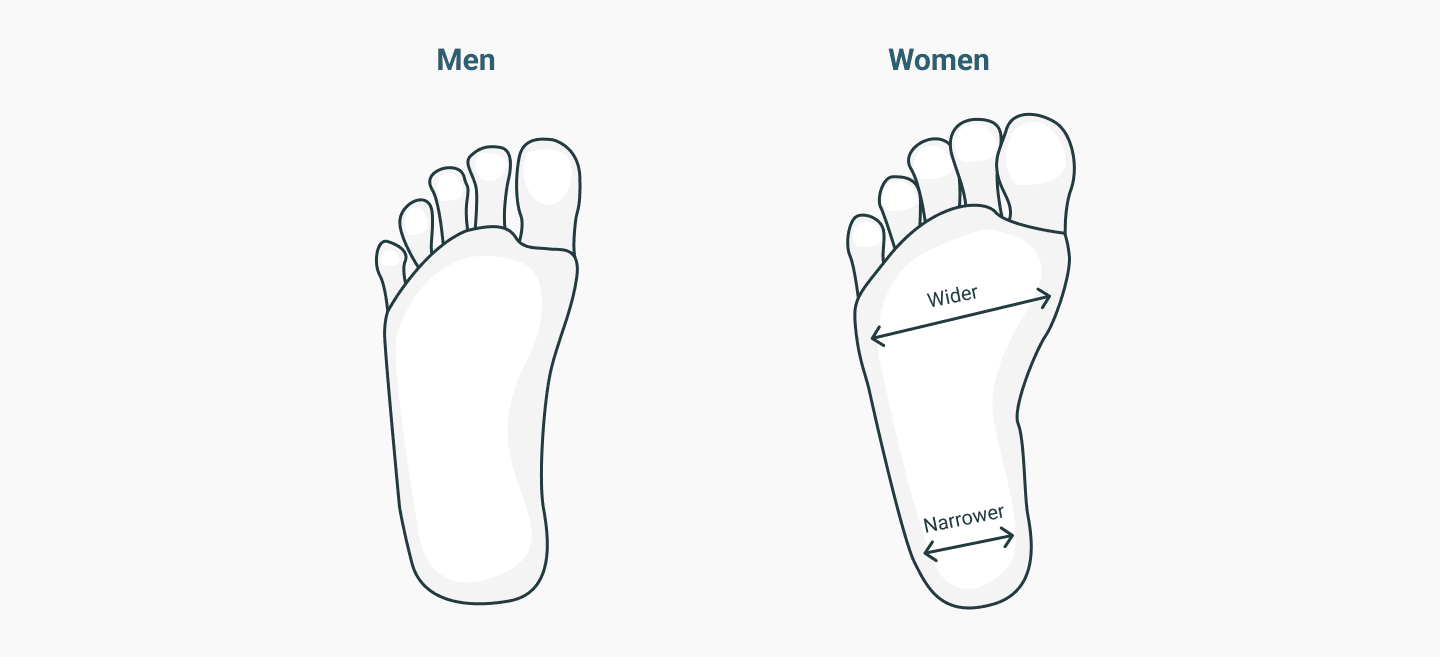
In general, men have a wider heel and a narrower forefoot than women. However, many brands claim the overall fit for women’s trainers is narrower. Basically, this depends on the brand a lot and, some simply make unisex trainers – the same design across all sizes.
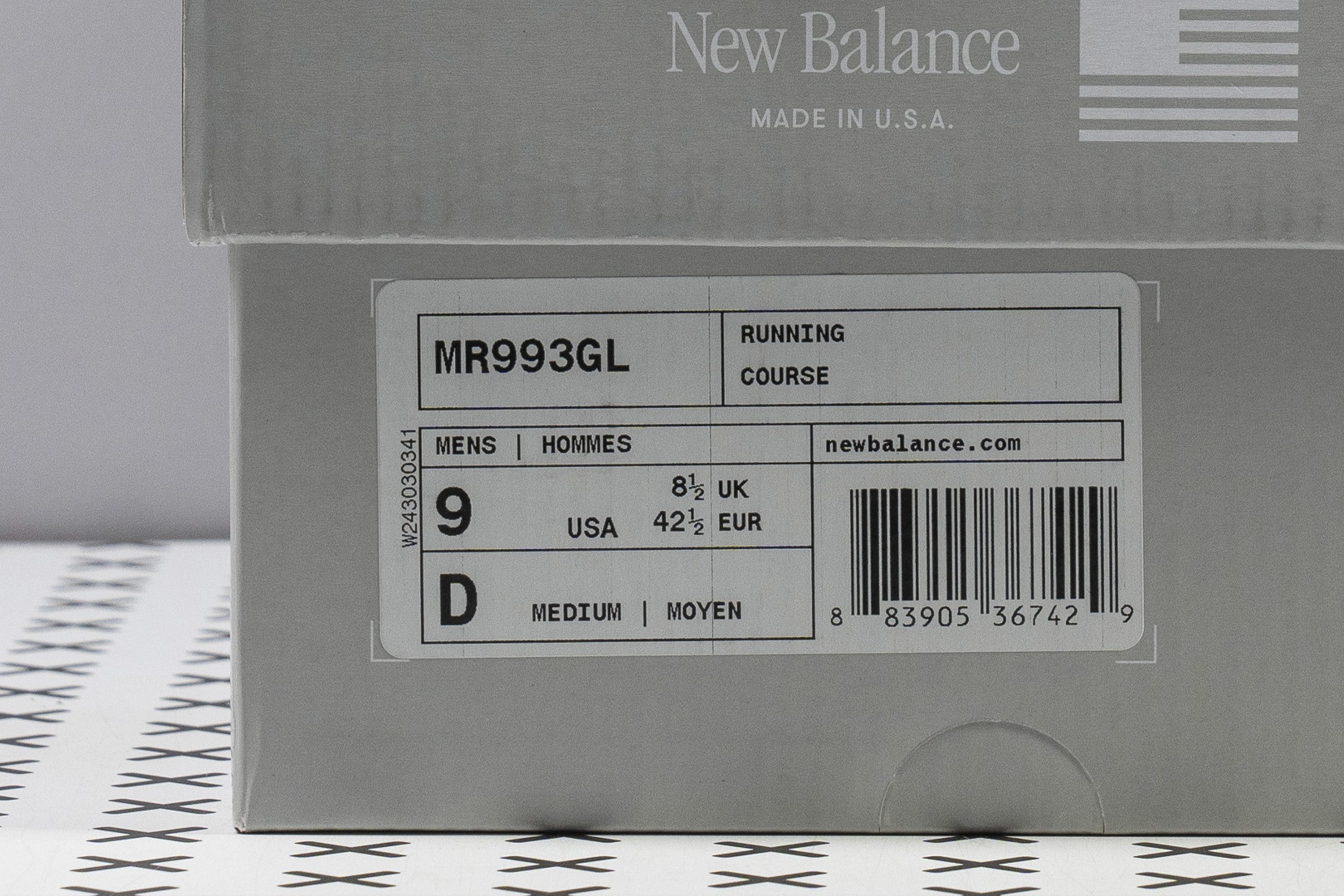
Another notable difference comes in the industry labelling. For different sneaker widths, industry uses different letters for men and women.
|
Width |
Narrow |
Medium/ |
Wide |
Extra wide |
|
Men |
B |
D |
2E |
4E |
|
Women |
2A |
B |
D |
2E |
If you’re looking for a specific toebox or overall sneaker width, jump directly to the section Toebox and sneaker width.
5 things to pay attention to when buying trainers for men
Finding new trainers may be overwhelming, especially if you’re the kind of person who wants one perfect sneaker that lasts long and fits well. We wholeheartedly support this approach (instead of buying dozens of trainers), so we highlight here 5 features that we found most important:
- Cushioning – low to the ground or platforms, it’s important to understand what works for you and how soft and protective you want your trainers to be.
- Support and stability – some people overpronate and need supportive trainers, while others simply prefer very stable trainers.
- Durability – maybe it’s always the upper that gets destroyed the first on your trainers, or you burn through the outsole and start seeing midsole and insole layers. It’s great to find trainers that offer durability just where you need it.
- Breathability – don’t let those ventilation holes fool you, some are there just for the show!
- Weight – heavy trainers may be great-looking but hurt our feet after a while. Some are too heavy to spend a full day in them.
In this guide, we will talk about each feature in greater detail and tell you how to find trainers that shine in areas you prioritise.
Minimalist, average height, or platforms? Let’s talk cushioning
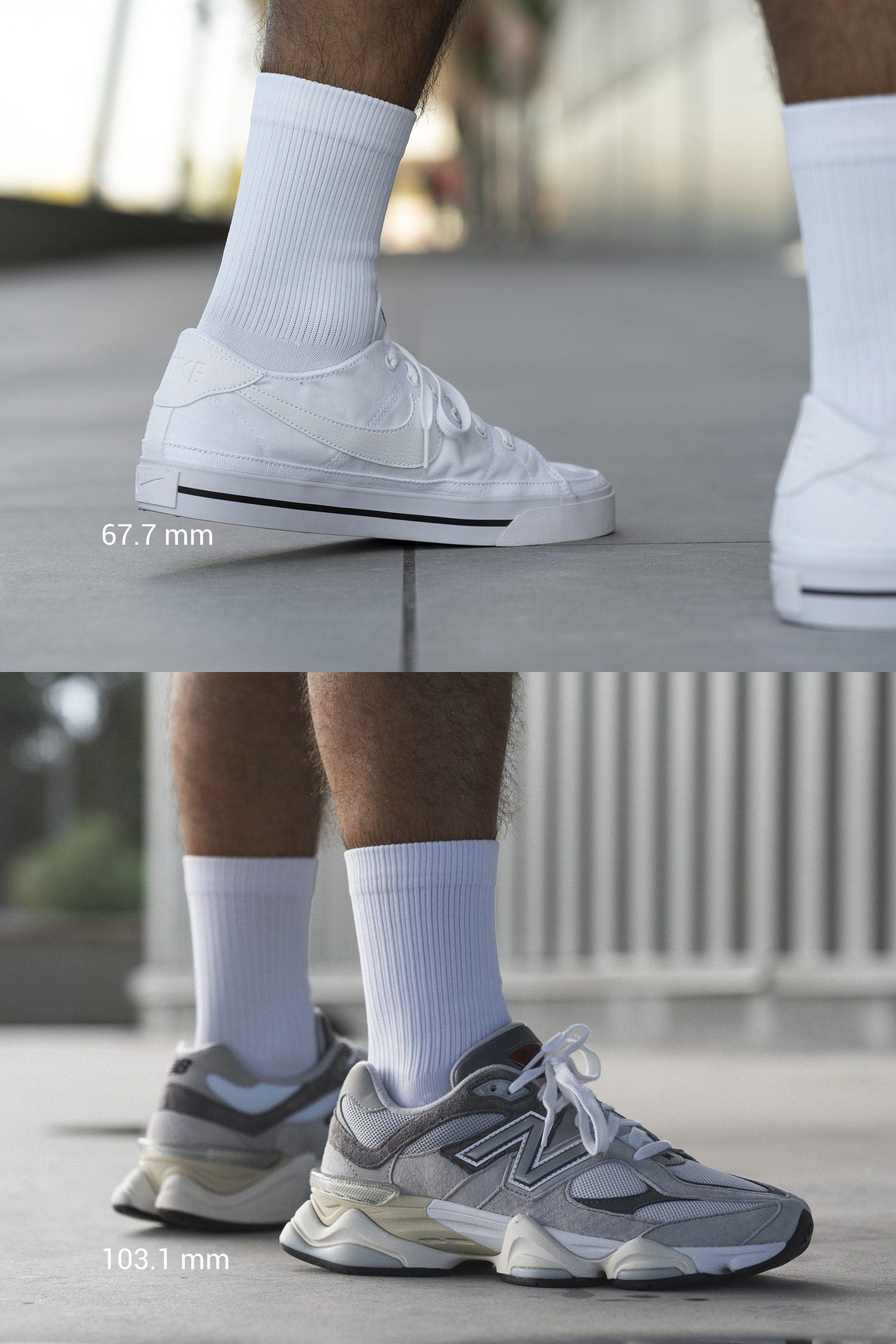
Stack height tells us how high off the ground we are when wearing trainers. We measure it at the forefoot and at the heel, although the forefoot measurement is a focus in performance categories like running, hiking, etc.
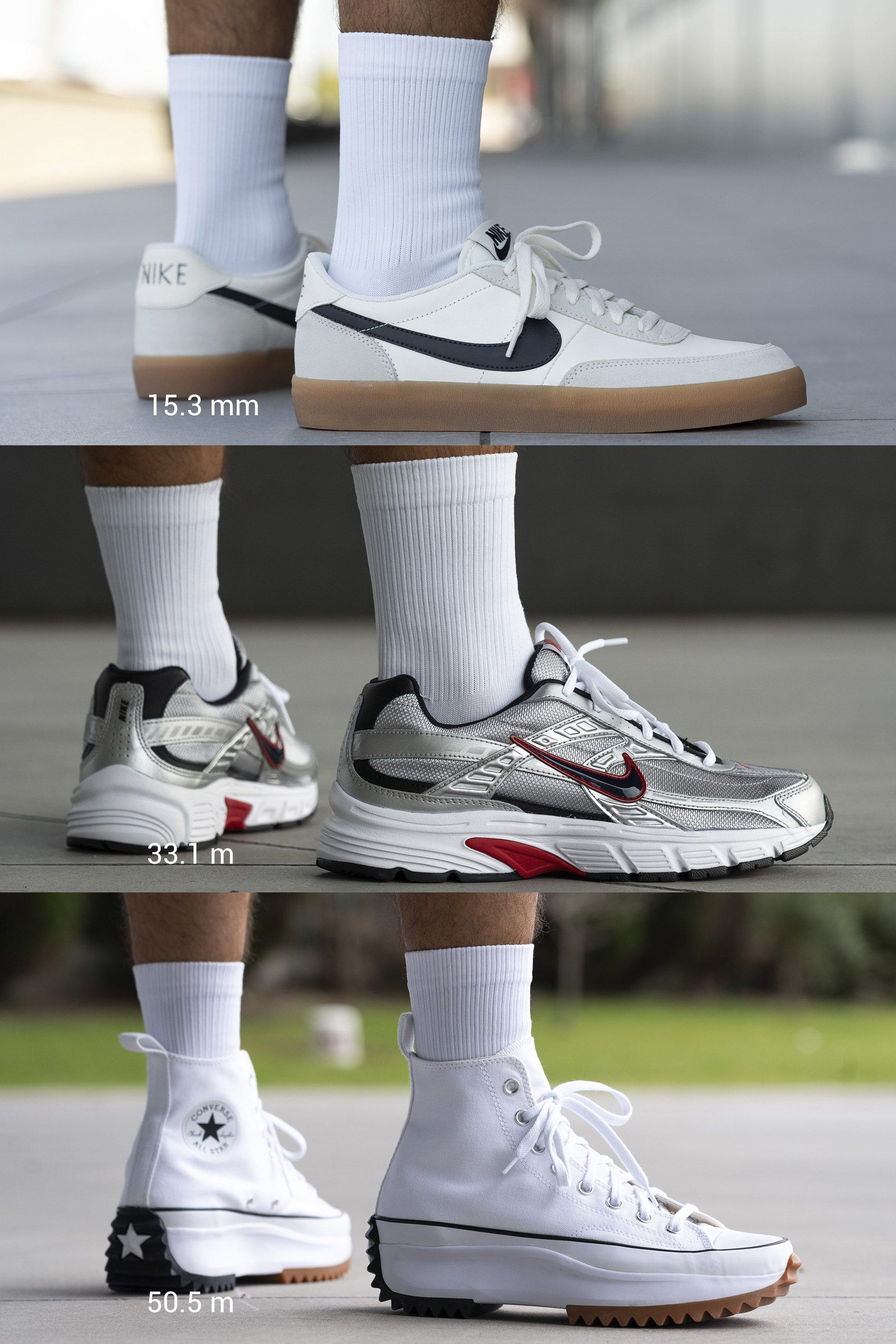
Trainers that are low to the ground (they can be barefoot or minimalist) usually offer a lot of ground feel. They are said to promote natural foot movement because they are very flexible and don’t feature a stiff heel counter or any stabilising technologies.
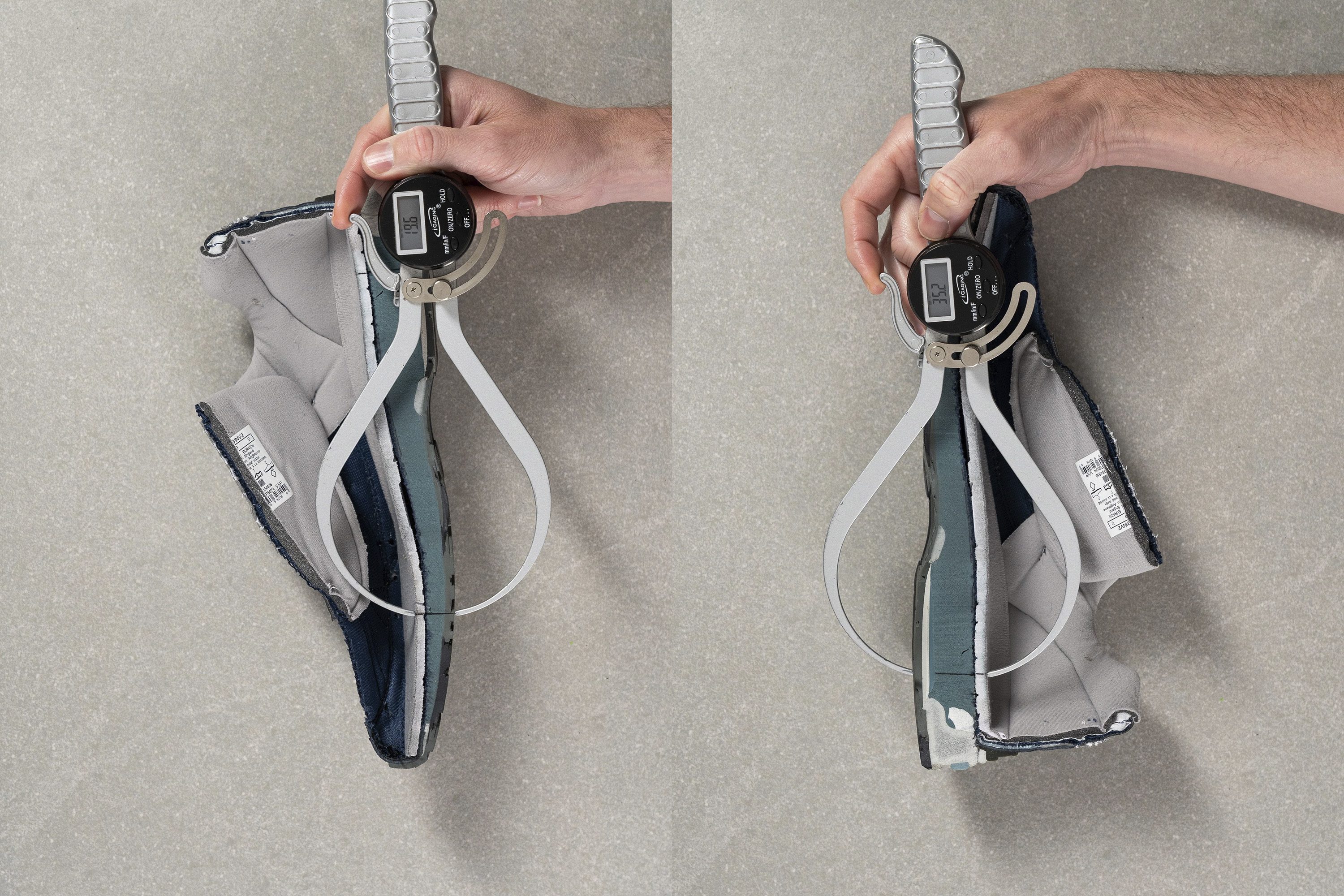
Platforms, on the other hand, offer a boost in height and absolutely no ground feel. For some, this means less or no premature fatigue as the only contact they have is with the midsole.
It’s important to note that, in platforms, the width of the platforms matter as well. Trainers that are high-off-the-ground easily get unstable when the platform is narrow. So, best to look a wider platform if instability worries you.
How soft are trainers for men?
Available options go from plush to firm, so it’s on you to find the platform that feels and works best for you. Keep in mind that:
- Soft midsoles can be very soft and it’s what we usually call cloudlike. They can be unstable, especially if high-stacked, and, when too soft, may even cause premature foot fatigue.
- Firm midsoles are much more stable and supportive but many don’t find them as comfortable. This stability may come to light when walking on somewhat varying terrain or when spending all day walking/standing in the trainers.
It’s best to find the balance that you’re comfortable with.
In our lab, we measure the softness of the midsole with a shore A durometer. We stick the needle into the foam and note down the reading. We do this 4 times and publish the average.
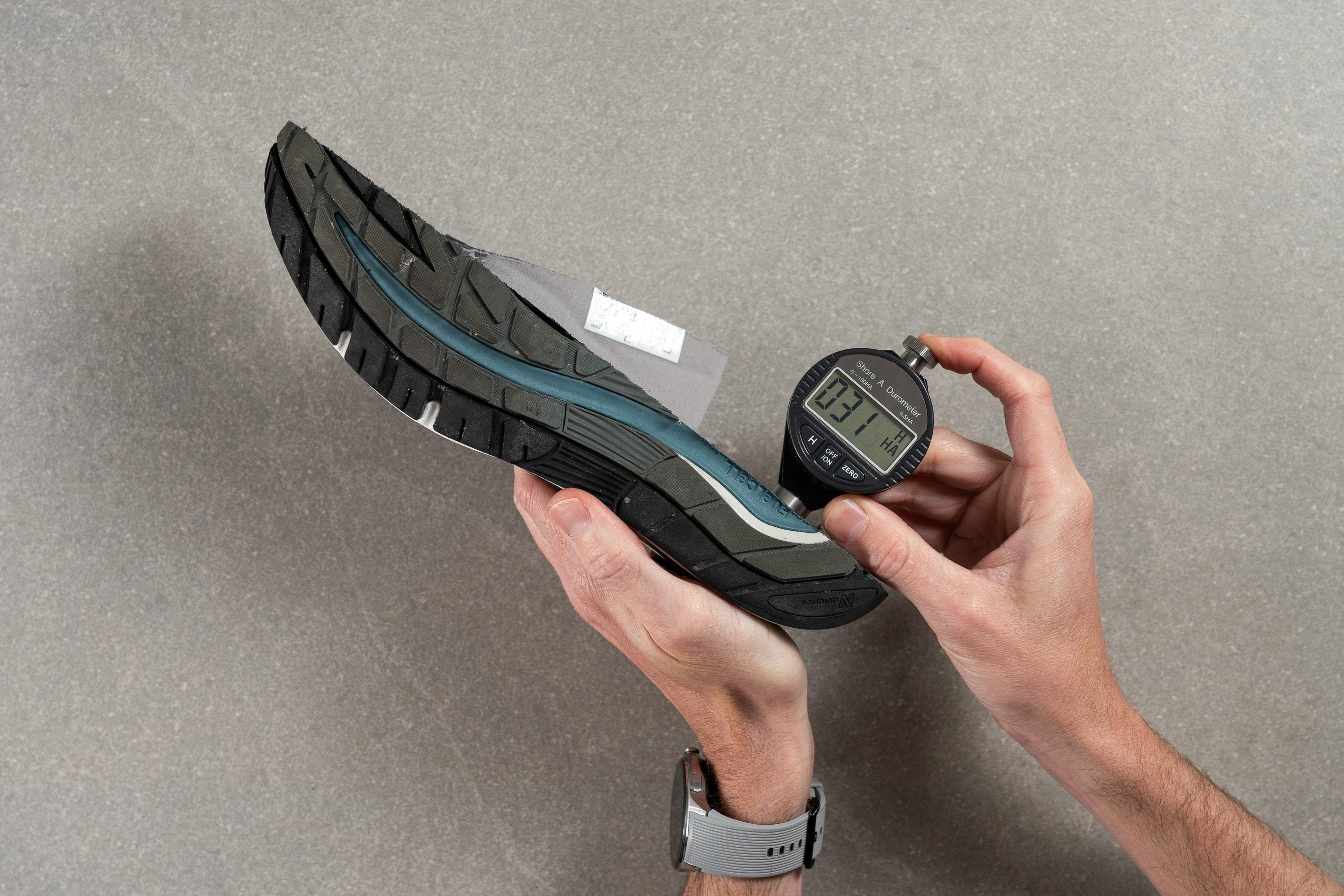
The lower the number on the durometer, the softer the midsole in the sneaker. Knowing this, you can see how softness varies in top-rated trainers:
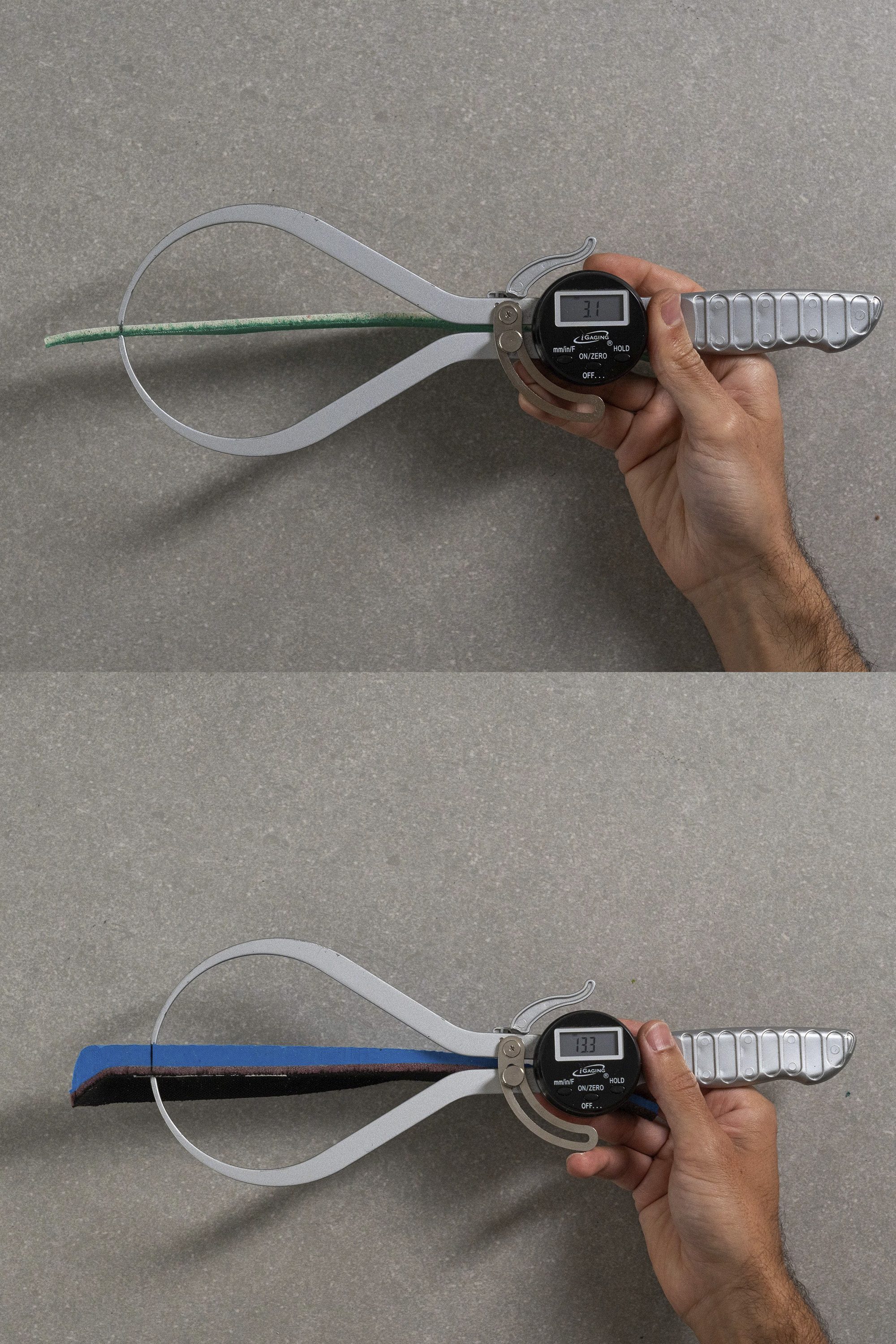
Keep in mind that the majority of trainers features an insole as well. It may be very thin, e.g. 3 mm, or it can be very thick, 14 mm being the thickest one we’ve measured so far. Insole adds another layer of comfort and you can count on it as well when looking at the softness of trainers.
Just in case you prefer plush foams or very firm foams, we will list here trainers that scored the lowest and highest on the durometer.
Another thing that remarkably enhances the comfort is the padding. In some trainers, there’s a lot of it, but in others, there’s none.
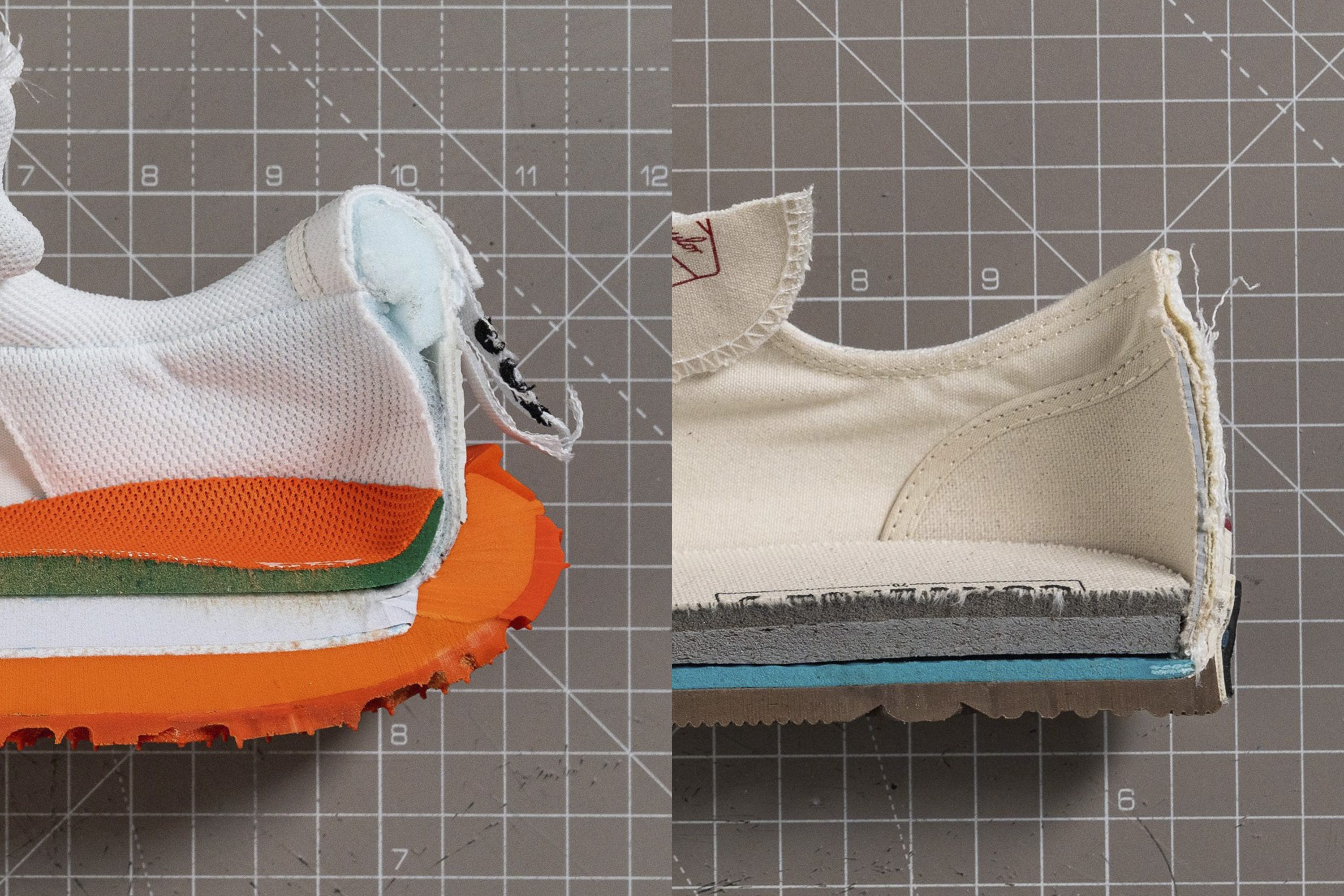
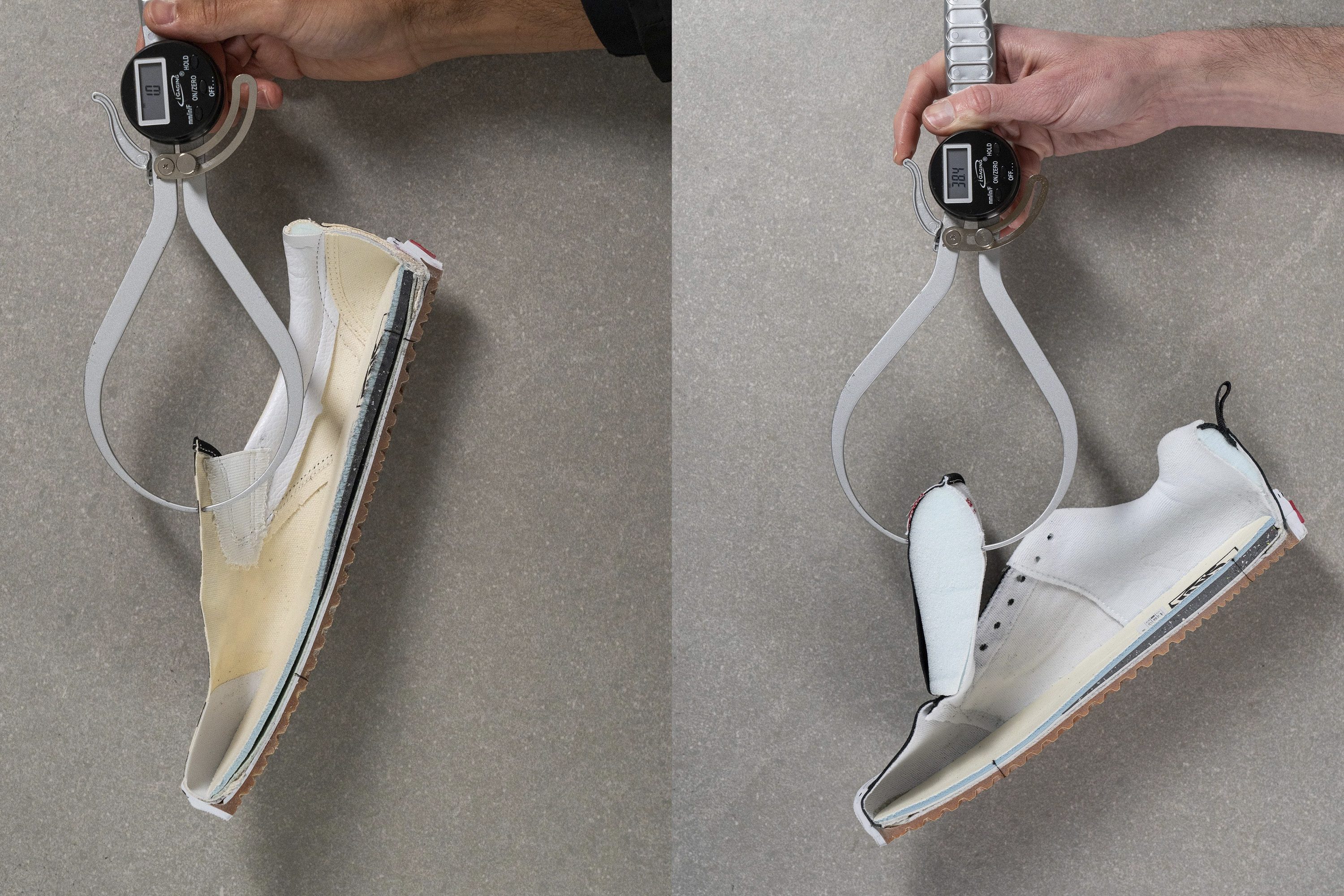
The thicker the tongue, the smaller the chance of experiencing a lace bite. Thicker tongues also breathe less (or not at all).
Shock absorption of men’s trainers
Although softness plays quite a role when it comes to comfort, shock absorption tells us how protective the midsole is. This matters even more than softness, especially when hitting a high daily step count goal, spending the whole day on foot, or if you’re a heavier person.
Shock absorption is the midsole’s ability to handle the impact, and it does that every time you hit the ground with your heel. Without a good midsole (when barefoot or in minimalist, very low-to-the-ground trainers), you would try to walk lightly, to hit the ground with less force, or you would maybe even change the foot strike so that you land on your forefoot. All because there’s not enough protection for your feet between them and the ground.
Midsoles that score high on this test are very good at dampening the impact, while those that score low may cause foot pain or foot fatigue because they send more stress to your legs (because they are unable to handle it properly).
Anything above 105 SA is considered great shock absorption in trainers for men.
How to find trainers that don’t wobble?
Unstable trainers can be very bothersome. You may already own a pair that makes you lose your balance or simply not safe enough. We can put an end to that by looking for trainers that have a wider platform and/or are lower to the ground.
The worst scenario is: narrow platform + high stack.
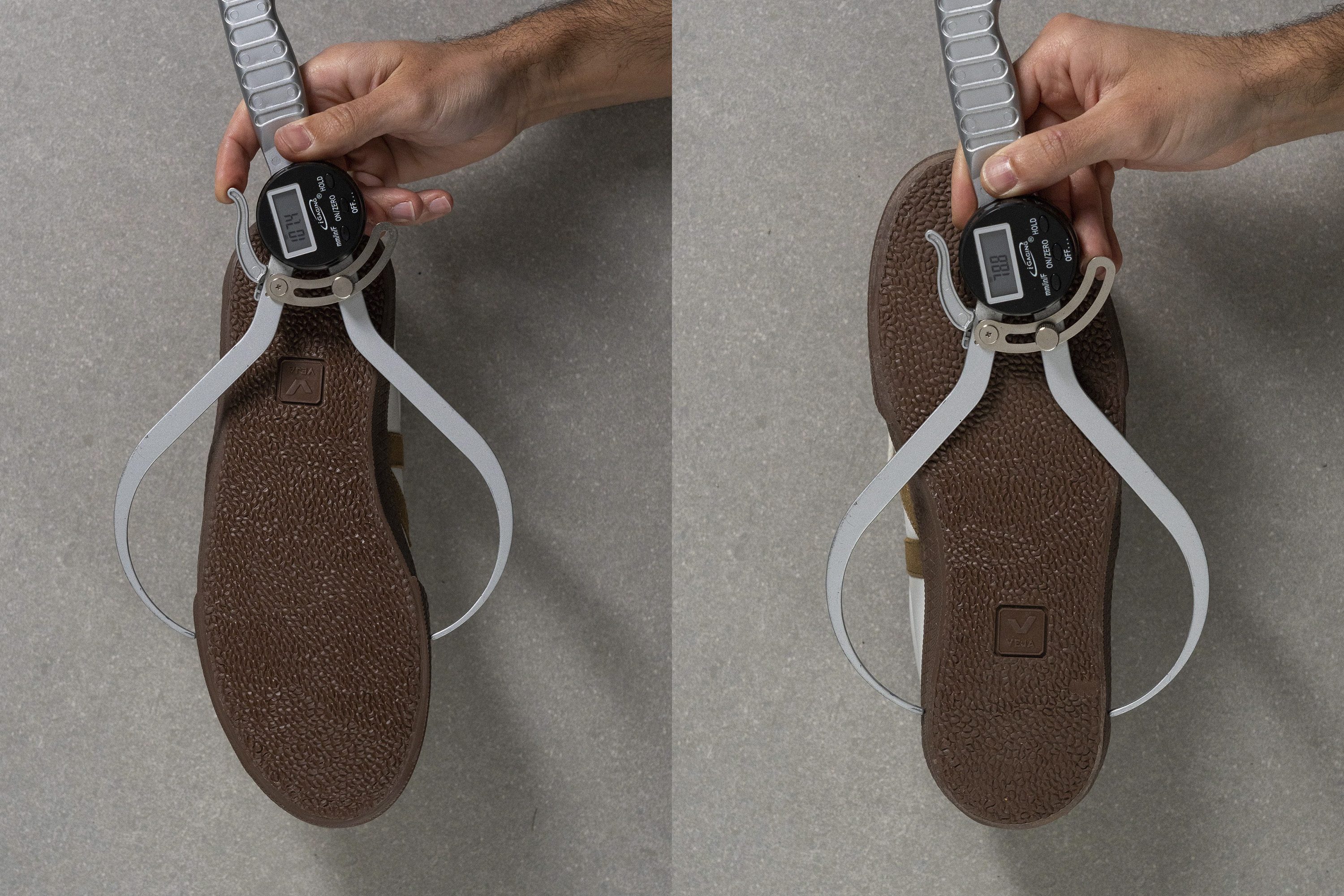
Fortunately, we measure the width of the platform of every sneaker that enters our lab. We do it at the forefoot and at the heel, but given that we walk in trainers, and everyone lands on the heel, we prioritise exactly this measurement.
The most durable trainers for men
To answer the question “Which sneaker is the most durable?” we should find out which sneaker part is in focus. In our shoe lab, we test the durability of 3 different sneaker parts: the toebox, the heel padding, and the outsole. Each of them get their own scores or results and you can prioritise any of those, depending on which sneaker part you care about the most or which one usually dies on you first.
Based on the depth and width of the damage, we assign each sneaker a toebox durability score of 1-5, where 5 is the most durable. We can not talk about the durability of the toebox without mentioning different materials. Canvas and knit are, on average, significantly less durable than mesh and leather.
We apply the same approach to the heel padding durability test.
However, the outsole material is different. It’s not knit/mesh/cotton, it’s usually rubber. Whatever it is, it is dense and firm and we can actually use a tyre tread gauge to measure the depth of the dent, we don’t have to assess the damage.
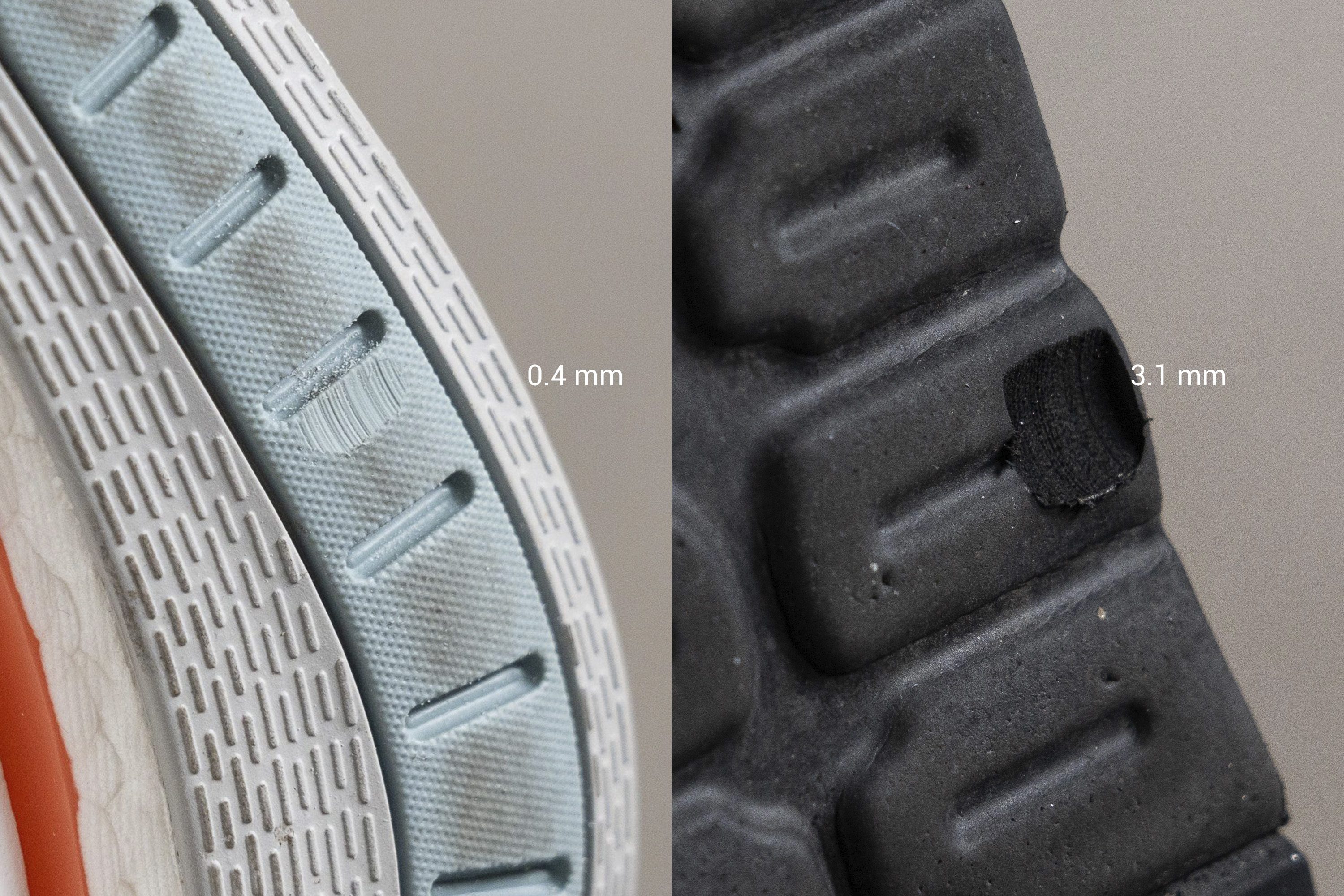
We can also find the most durable outsoles for trainers that scored the highest both for toebox durability and heel padding durability:
Best trainers for men for every season
Which season the sneaker is good for depends on its materials. They can range from very breathable to very warm and even waterproof. To analyse this, we pump smoke into the sneaker and then direct it toward the toebox using our 3D-printed cast.
This test tells us a lot and often goes against what we think we see. To our surprise, many of the ventilation holes we’ve seen were fake! They would look like ones but actually have an underlayer glued on the bottom so the air would not pass through them.
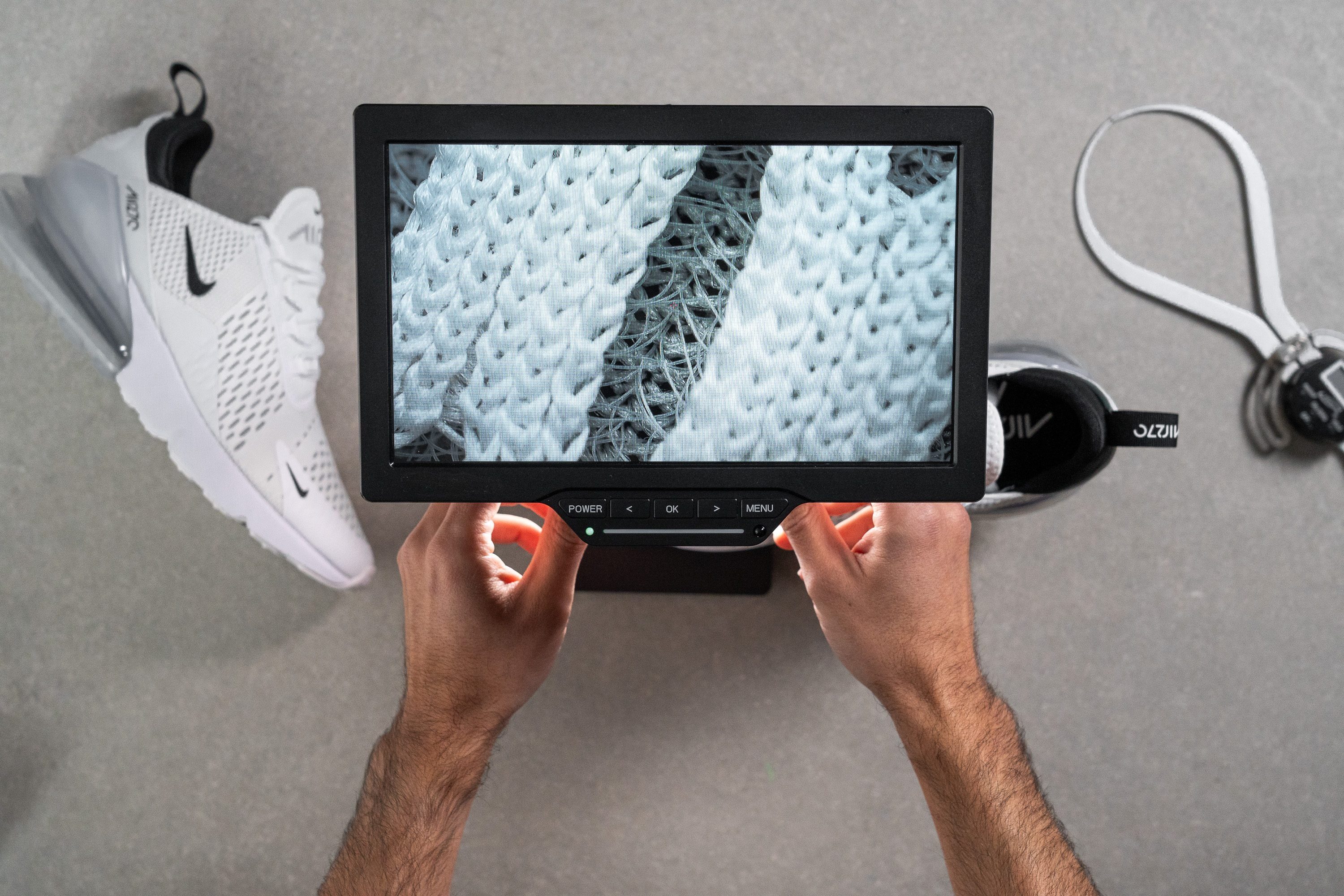
We learned about this thanks to our microscope images.


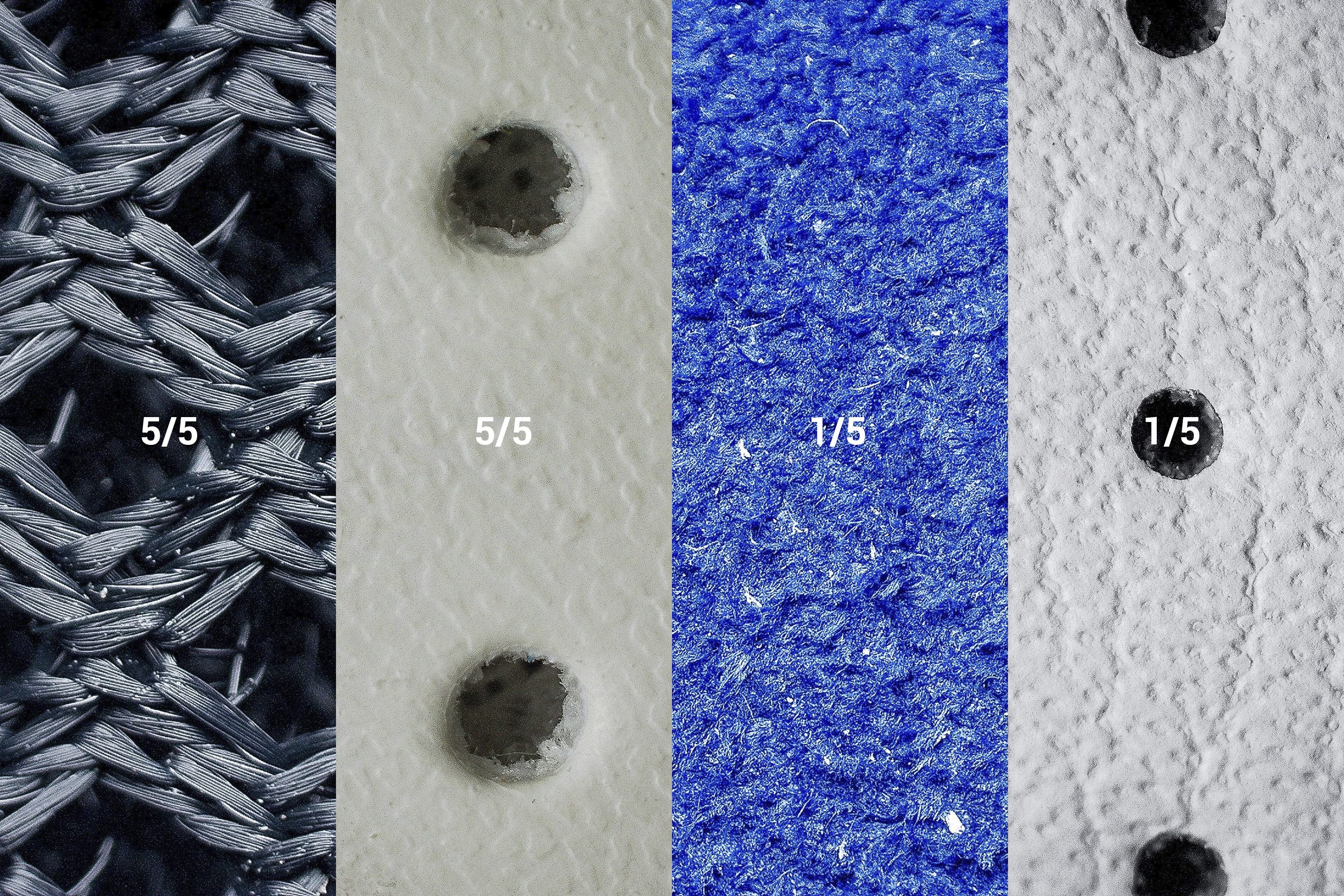
We recommend trainers that scored 1/5 on our breathability test to men who usually run in very cold weather, as these keep all the heat inside. 5/5 trainers are very breezy and great for hot weather or sweaty feet. Everything in between can work across different seasons, depending on the sock thickness.
Heavy trainers can cause fatigue
Some trainers are actually heavy and others feel bottom-heavy. The latter are usually canvas platform trainers, they have an upper with no structure and it feels as if they are hanging on our feet.
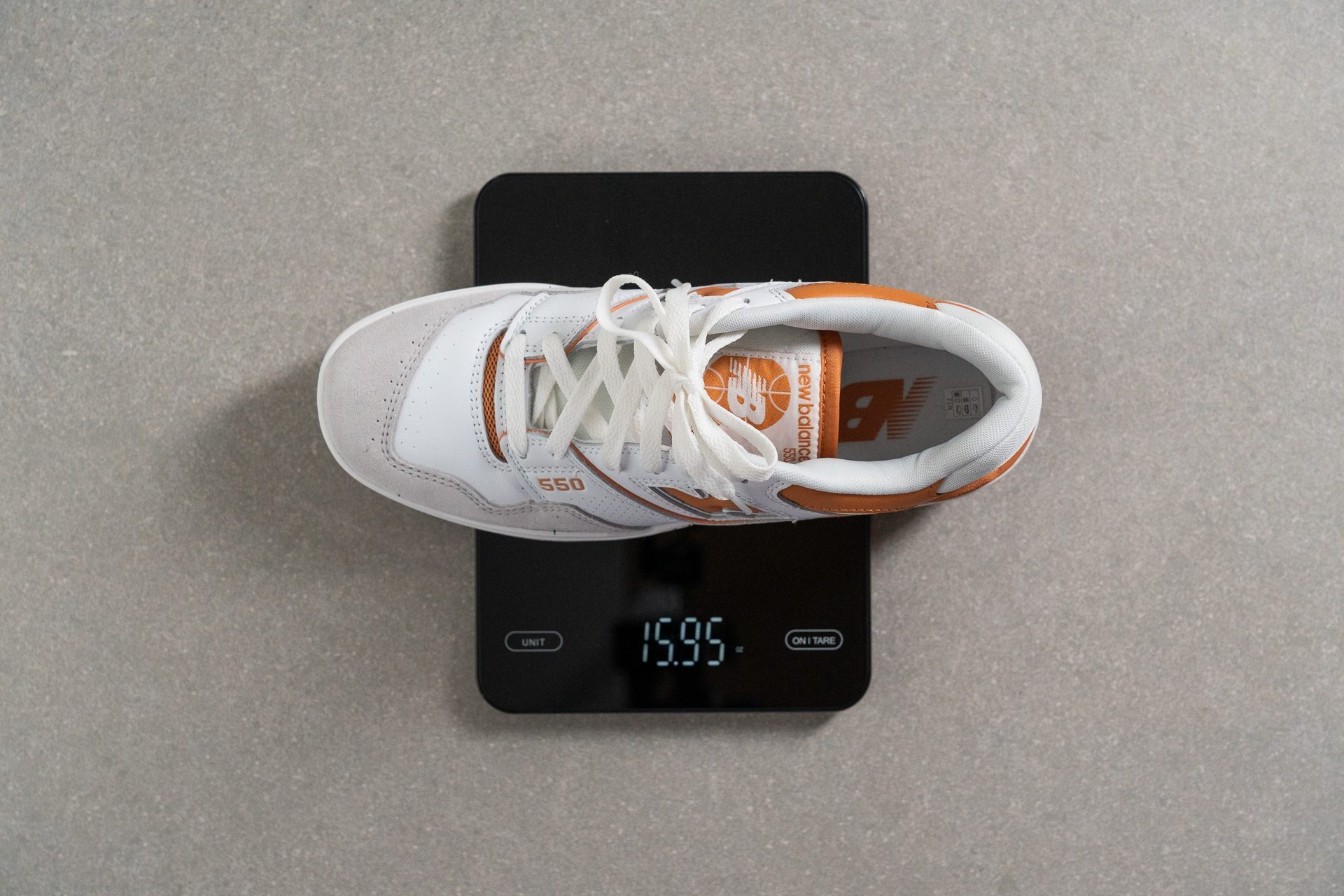
Whatever the cause is, heavy trainers can cause premature fatigue or they can feel as you can maybe walk for 20 minutes in them but spending the whole day would have been a nightmare.
Some trainers may appear chunky but weigh less than their more classic and lower-to-the-ground counterparts.
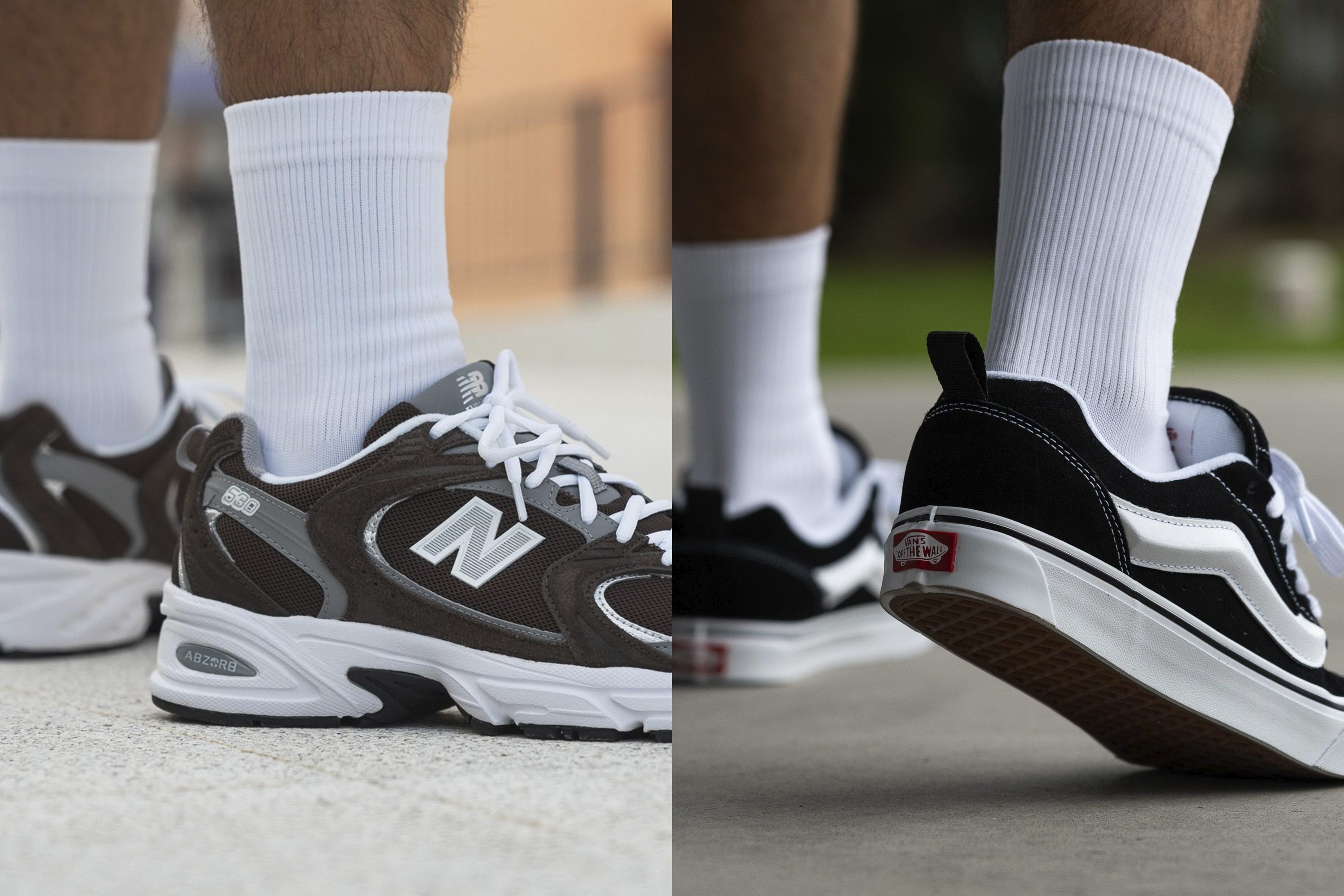
Weight depends on the stack height, materials used in the midsole, upper material (leather is, for example, much heavier than mesh; Gore-Tex membrane also adds weight), the rubber coverage of the outsole and the thickness of that rubber, and so on.
Here are the lightest trainers that have gone through our lab in case you want that featherlight experience.
And, if you’re wondering which trainers are very heavy and most likely not recommended for all-day wear, here’s the (regularly updated) list:
It’s hard to find a person who hasn’t experienced an injury and/or who does not overpronate. While shoes can’t heal our injuries, they can be of help while dealing with the injury or when we don’t want to aggravate one.
Men’s trainers for overpronation or flat feet
There are many ways to determine how you pronate, from not-the-most-accurate home tests to those done by a biomechanical specialist, podiatrist, or similar. If you overpronate, your ankles roll inwards and you most likely have stronger signs of wear and tear on the inside of your trainers.
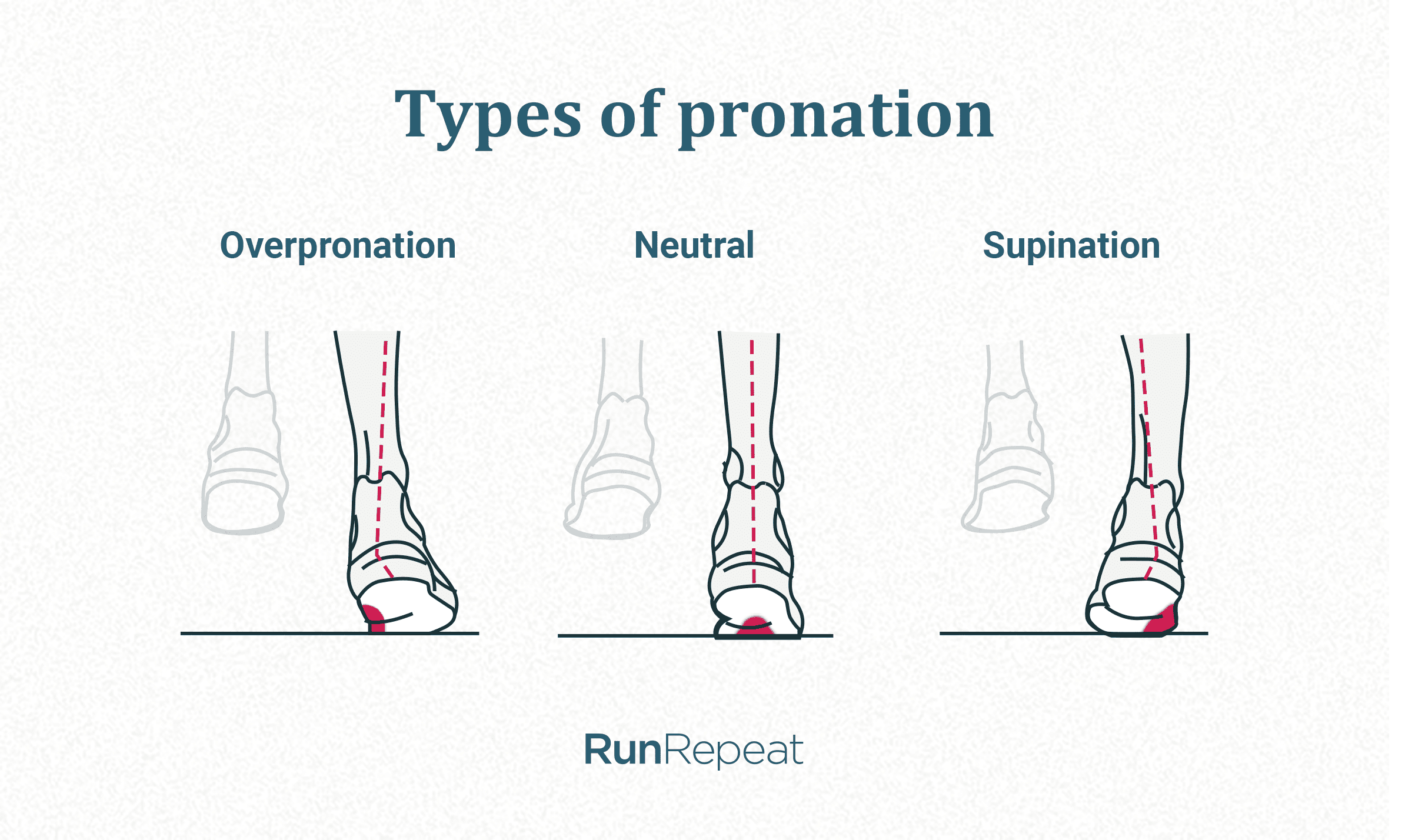
Many men who overpronate need a stable and supportive sneaker. From proper arch support, to different stabilising technologies, like a rigid platform, stiff heel counter, upper that’s not loose but has some structure, dual midsole with a firmer foam on the inner side of the sneaker, etc. We wrote about these features and pronation in general in great detail in our guide Pronation 101: Running Shoe Choices, DIY Analysis, Injuries.
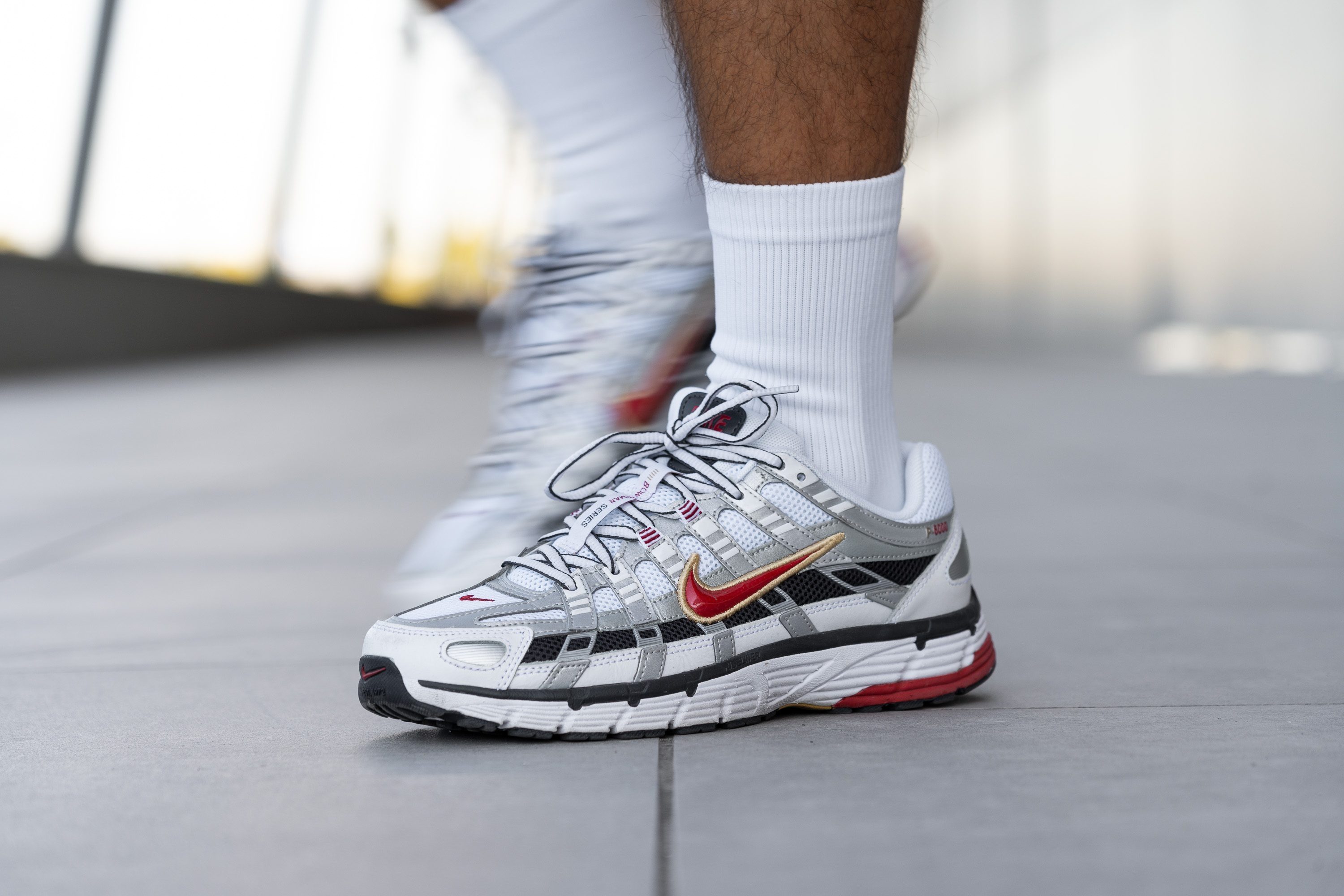
All the trainers we list here feature midsoles that are not too soft, platforms that are torsionally rigid, and stiff heel counters. This is a feature package we found to work best for men who have flat feet or who overpronate.
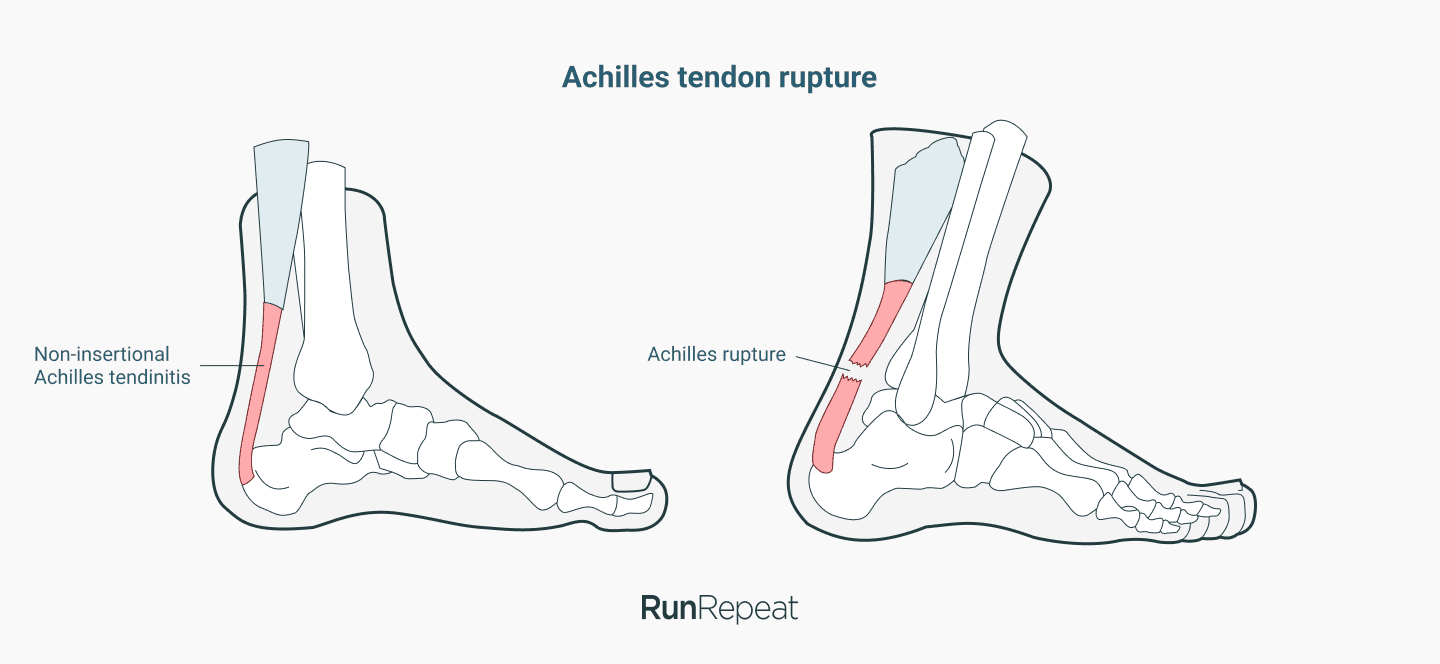
Which trainers to choose if you have Achilles tendonitis?
Painful Achilles tendons can limit our movement to the point of barely making any. However, with a proper diagnosis and rehab plan, it gets much easier. Some specific footwear features can help us as well.
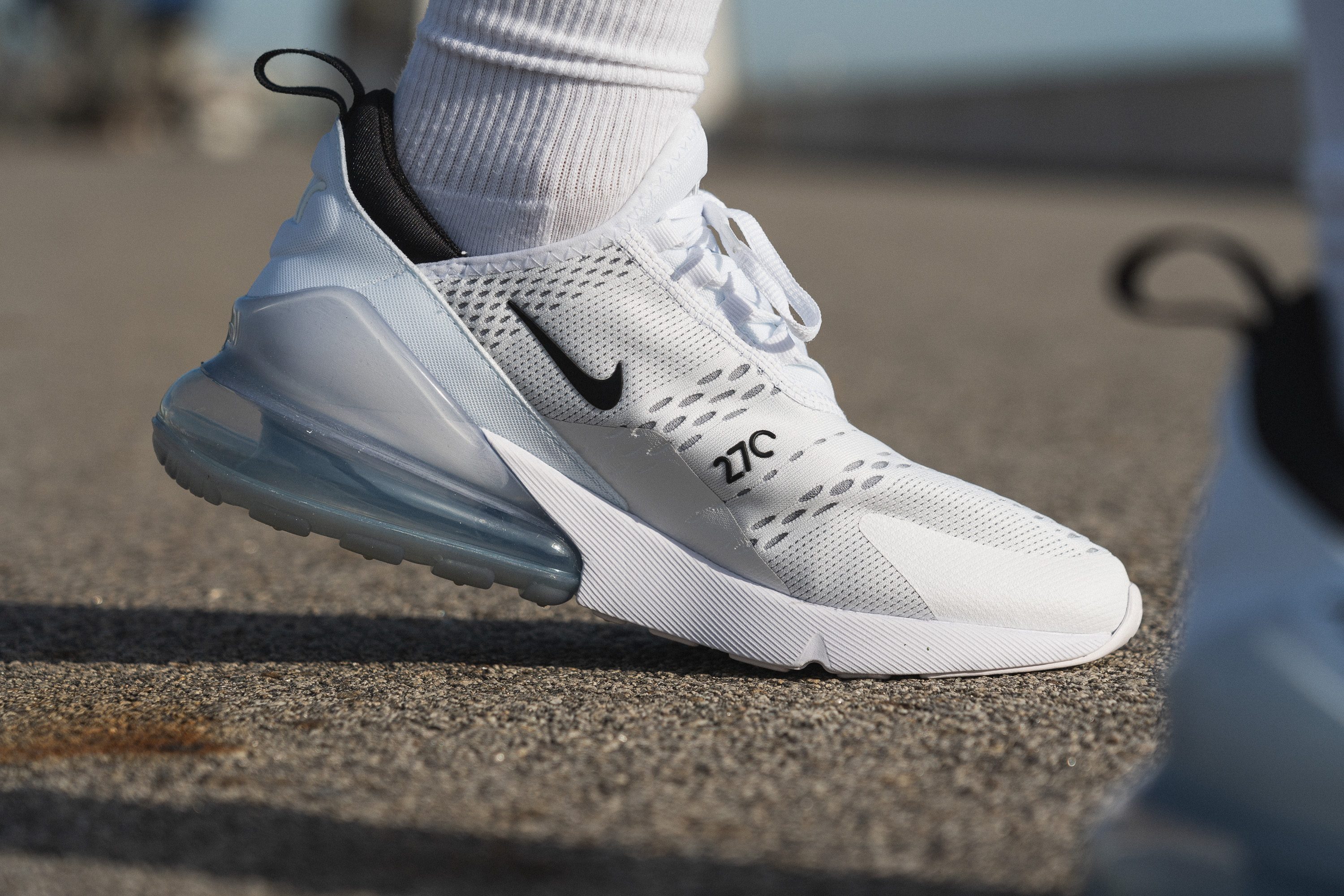
The idea is to remove the stress sent to the Achilles tendons as much as possible. Not just the stress from the impact (when we touch the ground with the heel) but also any unnecessary micromovements. We accomplish this with cushioned trainers that feature a high heel drop, stiff heel counters, and are torsionally rigid.
Features found in trainers for plantar fasciitis
What can you expect from trainers that will most likely feel good when you’re dealing with plantar fasciitis? 5 things: a cushioned sneaker, high heel to toe drop, midsole softness from average to firm, stiff heel counter, and a torsionally rigid platform. All of these have shown to work well when it comes to relieving the plantar fascia from unnecessary stress that other leg muscles and joints can deal with.
Men’s trainers for shin splints
Shin splints. Such a common overuse injury. While resting and doing rehab, one still has to move from point A to point B. To do that while dealing with shin splints, it’s best to use footwear that can cushion your feet generously and offer a stable platform.
Here are trainers for men that have all the features we need for shin splints and that are best rated.
Can you wear women’s trainers?
If they fit well, of course. As mentioned at the beginning of this guide, they may be slightly narrower, especially at the heel. But, if the length of your feet correlates to a sneaker size made for women, you’re in for a treat, as you’ll most likely have many more colorways to choose from. Sometimes even the discounts!
We always advise measuring the length of your feet and finding the size that corresponds to that length. You can find the corresponding length in millimetres or centimetres on the label itself under MONDO or JP, on the shoe box, or on the tongue.
Toebox and sneaker width
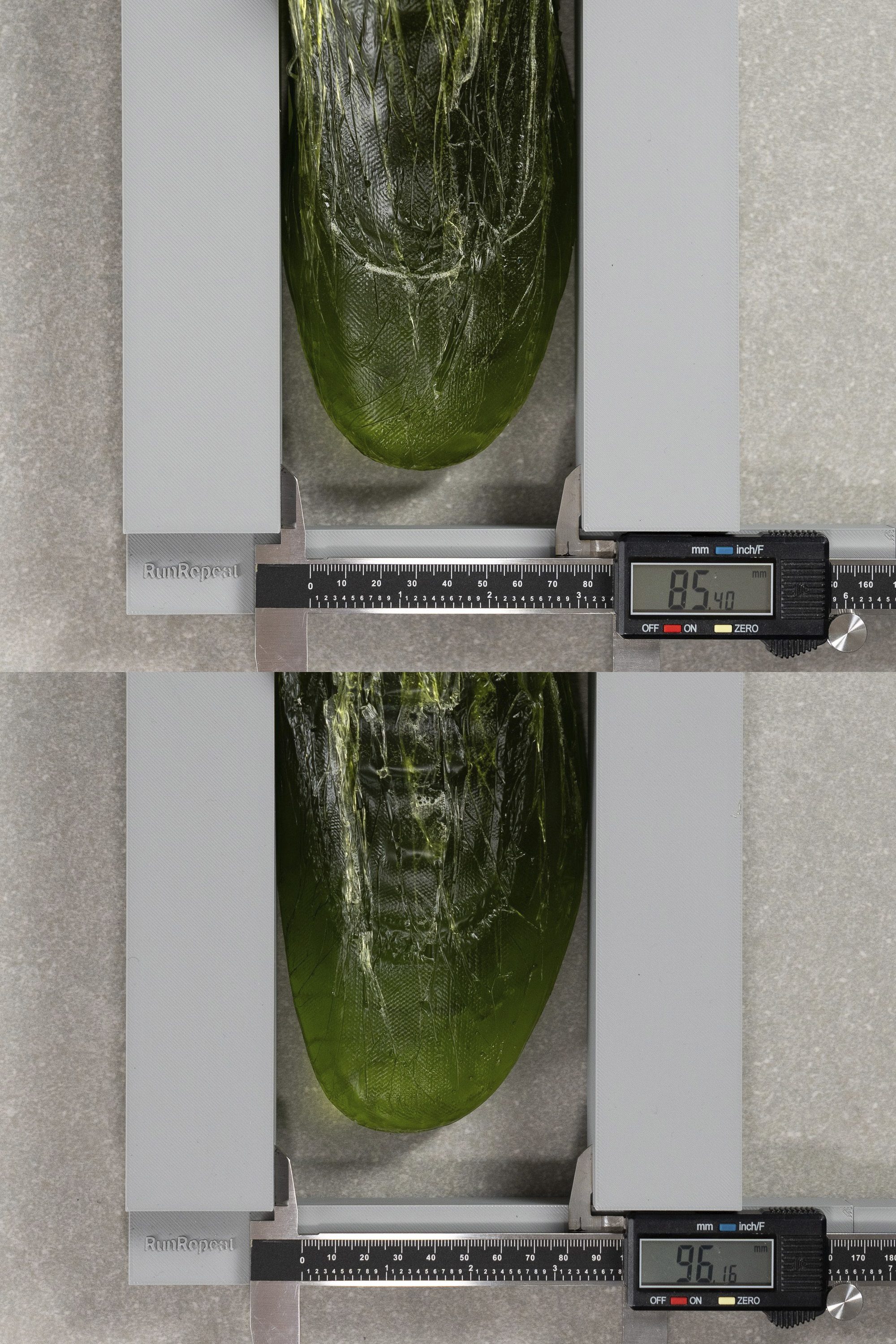
Nailing the fit is tricky, especially when it comes to the toebox. To understand this better and to get accurate toebox measurements, we created a gel that, once poured into the shoe and frozen, gives us a mould of the shoe’s interior that we can work with!
We measure the width of the shoe in 2 places, at the big toe and where it’s the widest.
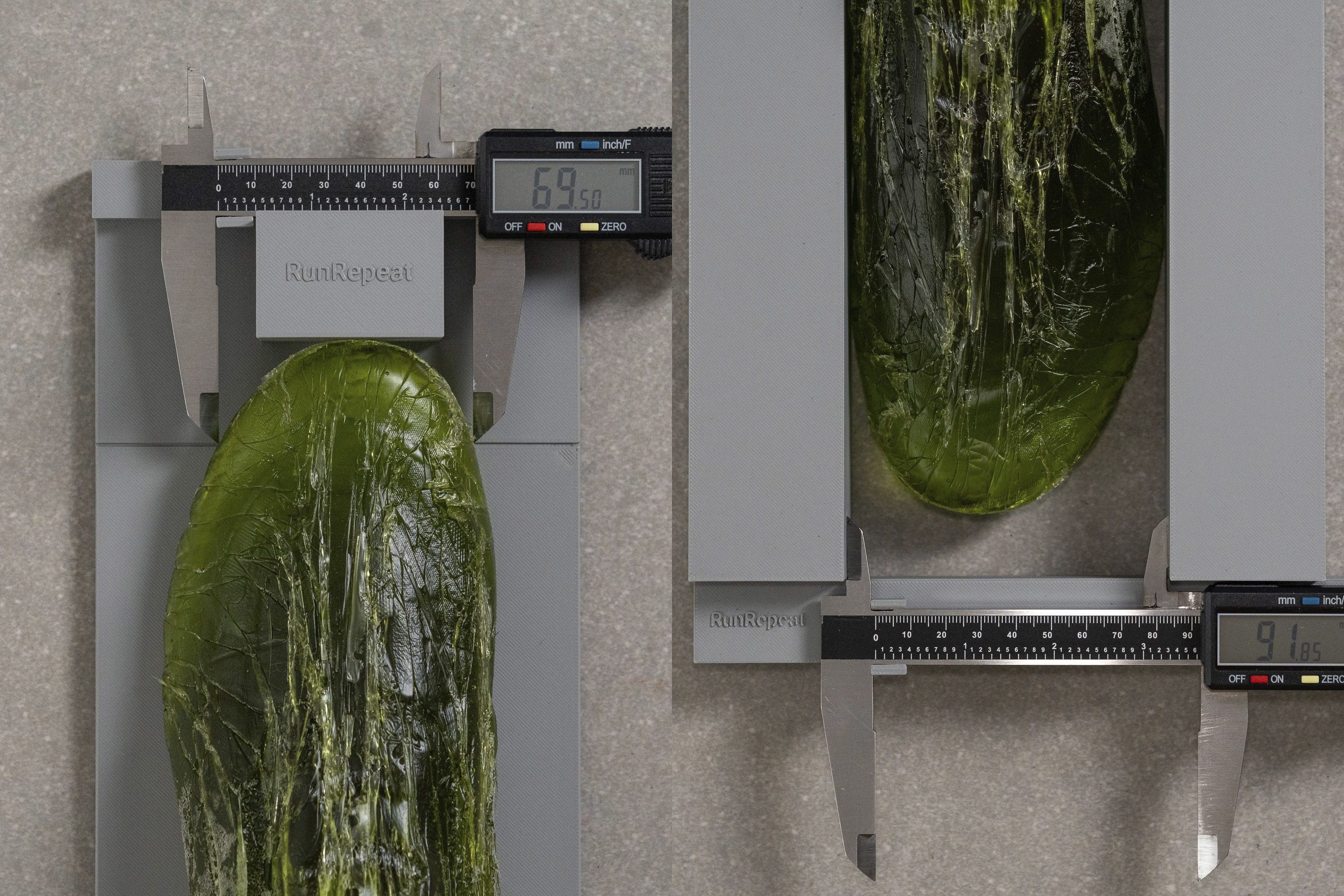
The big toe width is the one we look at when we discuss toebox width. However, we can take the other measurement (shoe width) into account as well, because the difference between the 2 tells us how tapered the toebox is.
The bigger the difference between the shoe width and the toebox width, the more tapered the toebox. The smaller the difference, the more rounded the toebox.
With that in mind, we will list trainers with both the narrowest and the widest toeboxes here.
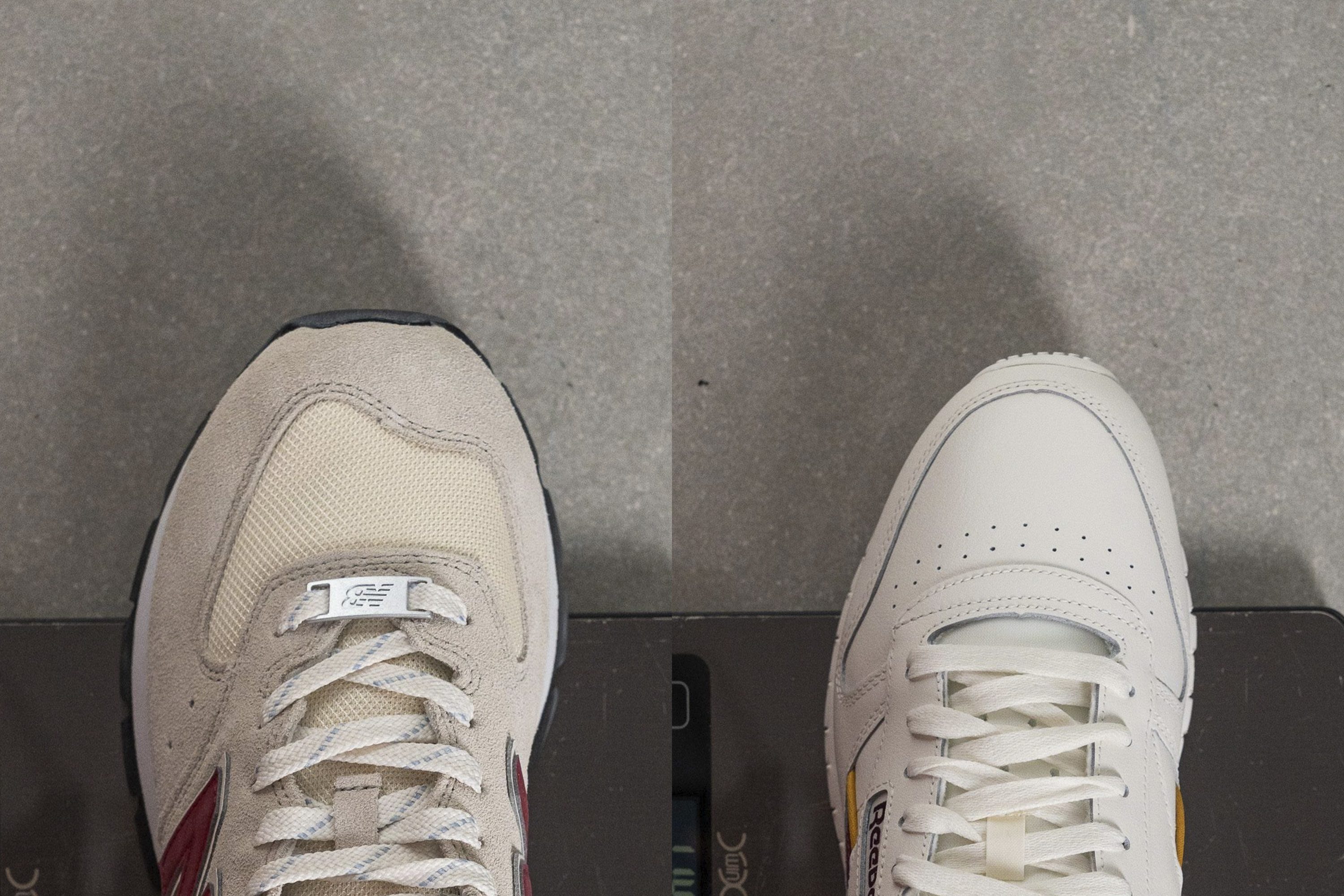
However, when it comes to the overall sneaker width, you can choose a narrow (B), medium (D), wide (2E), or extra-wide (4E) sneaker. You should know that often, it’s the upper that’s given more volume and not the whole sneaker. It’s best to double-check what the brand claims though.
Looking at our lab measurements, you can consider a) the platform width and b) the width of the shoe. The latter has been shown to be a great indicator of the overall sneaker width.
Different sneaker styles
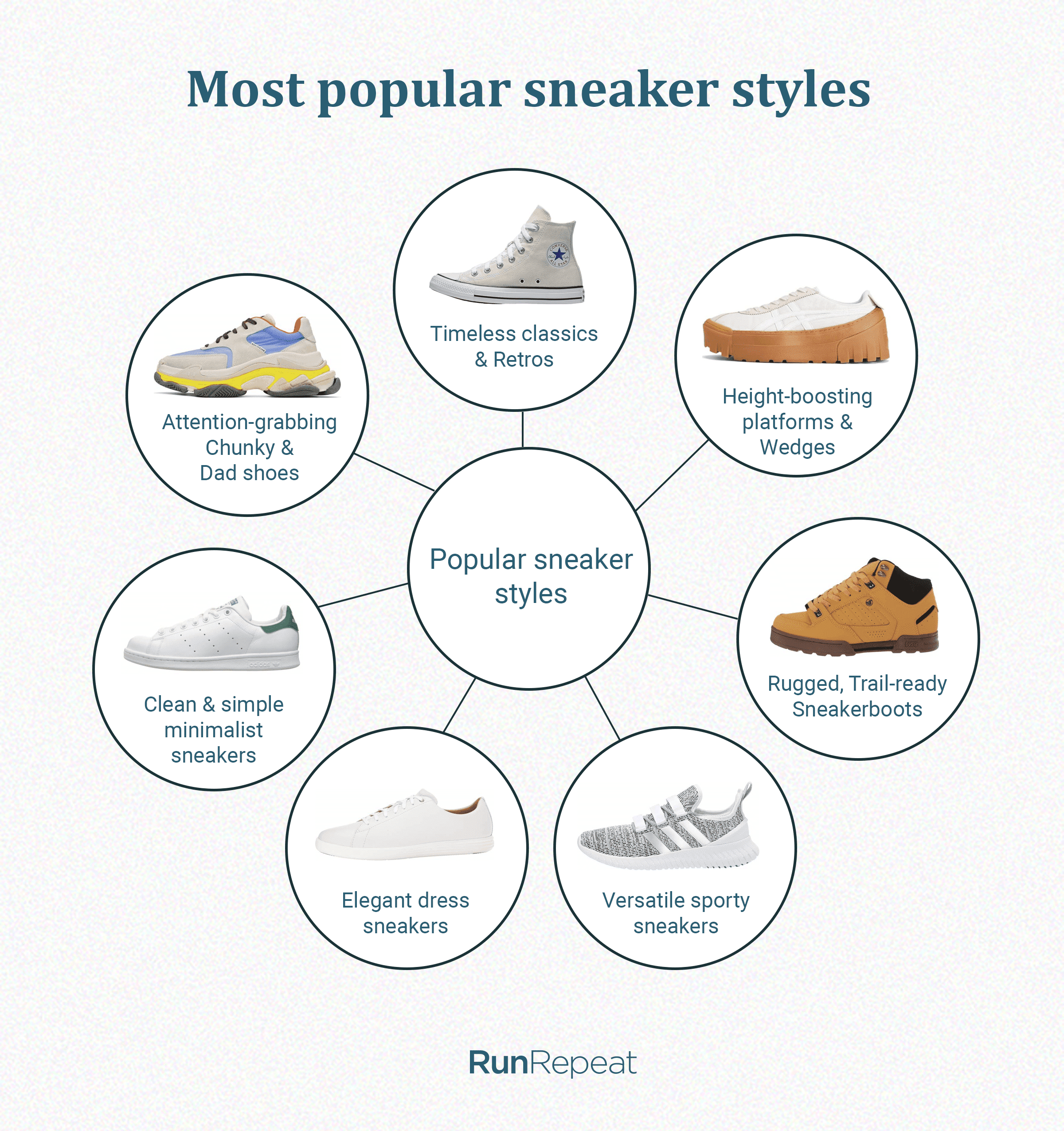
There are plenty of sneaker styles to choose from and they all have their pros and cons. Here’s a quick overview:
|
Style |
What to pay attention to |
|
Chunky and dad shoes |
Weight. Some trainers look heavy and others look and are heavy. The heavier the trainers, the less time we’re comfortable spending in them. |
|
Platforms and wedges |
Weight and stability. If the platform is tall and narrow, that can lead to instability. |
|
Classics and retros |
Durability, especially if these have a canvas or fake-leather upper. |
|
Minimalist trainers |
If they are very low to the ground, you may end up feeling every little bump, pebble, etc. This can be tiring for your feet if you’re not used to it. Also, minimalist trainers tend to have no supportive features. |
|
Futuristic trainers |
Heel drop may be too high. They can feel as if you’re standing on an incline. Many simply adjust to it, but be careful about the fit, as your feet should not slide down and there should be no extra pressure on your toes. |
How to recognise fake leather
It’s easy when you have the lab, so you’re able to rip the trainers into pieces and then even burn them. That’s exactly what we do to discover the leather type: real or fake.
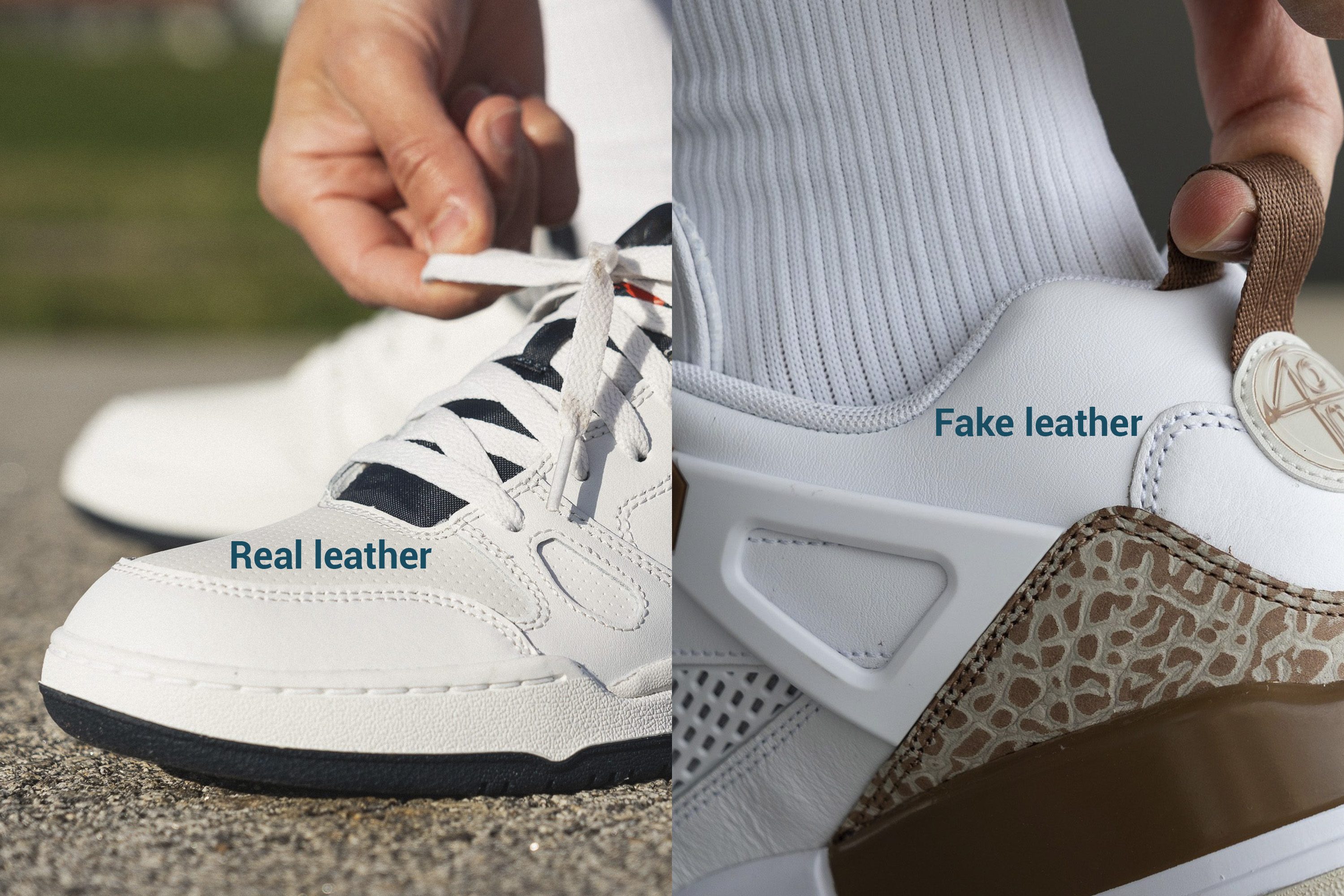
However, if you don’t own a lab and want to judge the quality just by looking at the trainers, you may be in trouble, as it can be quite tricky. Here’s our advice:
- Fake leather usually has a blue-ish colour because chromium salts were used for tanning, it feels foamy and, upon very close inspection, you may notice that the first layer is separating. When you look at the back/bottom, it’s all fuzzy, loose fibres point each to its own direction.
- Real leather has no blue residue, never has layers separating as it’s not made of different layers glued together, the raw edge where it was cut often reveals the grain pattern, and it feels dense, not foamy. At the back/bottom, it is flat, no loose threads.
|
If you think brand descriptions will be enough, they won’t. “Genuine” is often used for fake leather, and there are absolutely no legal ramifications for calling a material genuine leather when it’s in fact filler with traces of leather fibres. |
We can see that, even when fake leather is included, people still love it.
link